
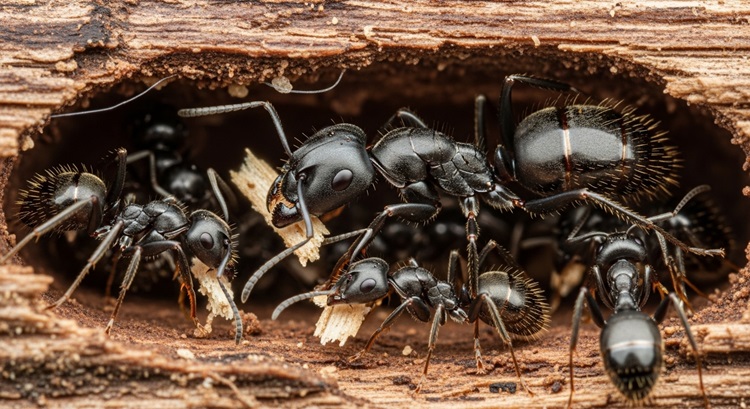
Carpenter ants may appear across Redmond due to the presence of moisture, trees, and seasonal rain. These ants prefer wooded environments and damp conditions. Homeowners who spot a few carpenter ants outside may not be alarmed, but ant activity inside a home may point to a deeper issue. Unlike other ants, carpenter ants do not eat wood. They carve through it to create nesting space. This habit alone gives homeowners reason to pay attention and hire a Pointe Pest Control technician to assess the problem and address it.
Why Carpenter Ants Target Homes
Carpenter ants search for a shelter that stays stable year-round. Homes provide warmth, cover, and access to moisture. Redmond’s frequent rain raises humidity around foundations, decks, and crawl spaces, which makes nearby wood more attractive to carpenter ants. Wood that stays damp due to leaks, poor drainage, or shade can offer ideal nesting conditions. Ants often start outdoors in tree stumps, firewood, or landscape timbers, then expand toward nearby structures.
Moisture Drives Ant Interest
Moisture can influence carpenter ant activity. These ants favor soft or water-damaged wood since it takes less effort to hollow out. Roof leaks, plumbing issues, and poor ventilation can increase the risk. Ants that discover these areas may set up satellite nests indoors while keeping a main nest outside.
Damage Differs from Termites
Carpenter ants create smooth tunnels inside wood and push out sawdust-like debris called frass. Termites consume wood and leave a more uniform pattern. Carpenter ants work at a slower pace than termites, but the damage can still add up eventually. Unnoticed infestations can lead to compromised structural beams, window frames, and decks.
Signs That Point to a Problem
Piles of frass near baseboards or window sills suggest active tunneling nearby. Faint rustling sounds within the walls may appear during quiet hours. Large black ants inside the home, especially during the evening, raise concern. Occasional ants near sinks or pet bowls may seem minor, but repeated sightings suggest an established colony.
Outdoor Clues Also Matter
Activity outside the home offers useful clues. Ant trails along foundations, tree trunks, or fences often lead back to nesting sites. Firewood stacked near walls draws carpenter ants due to moisture and shelter. Rotting stumps, fallen branches, and old landscape timbers also support colonies. Homes surrounded by mature trees face higher exposure, especially after storms or heavy rain.
Seasonal Activity Patterns
Spring and early summer mark peak movement as colonies expand. Winged ants may appear during this period, which signals mating flights and colony growth. Mild temperatures in Redmund extend their active season. Rainy stretches keep wood damp, which allows ants to continue working without long breaks.
Why Ignoring The Ants Can Cause Issues
The concern with carpenter ants lies in their long-term impact. Small tunnels turn into larger galleries as colonies grow. This can weaken wood structures. Homeowners who dismiss early signs may face higher repair costs later. Addressing moisture and entry points early can prevent wider spread within walls and framing.
Carpenter Ants May Target Certain Areas of the Home
Ants may be found in decks, porches, and window frames, which are usually exposed to rain and shade. Crawl spaces with poor airflow can also be taken advantage of. Areas near plumbing lines offer warmth and moisture. Ants use wall voids as travel paths, which allows them to reach upper floors without much exposure.
Prevention Reduces Risk
Worry becomes manageable with awareness. Homeowners must reduce moisture to make their homes less appealing to carpenter ants. Also, they must fix leaks and improve ventilation. They should direct water away from foundations to prevent moisture from developing. In addition, firewood should be kept away from the home to limit outdoor nesting near structures.